
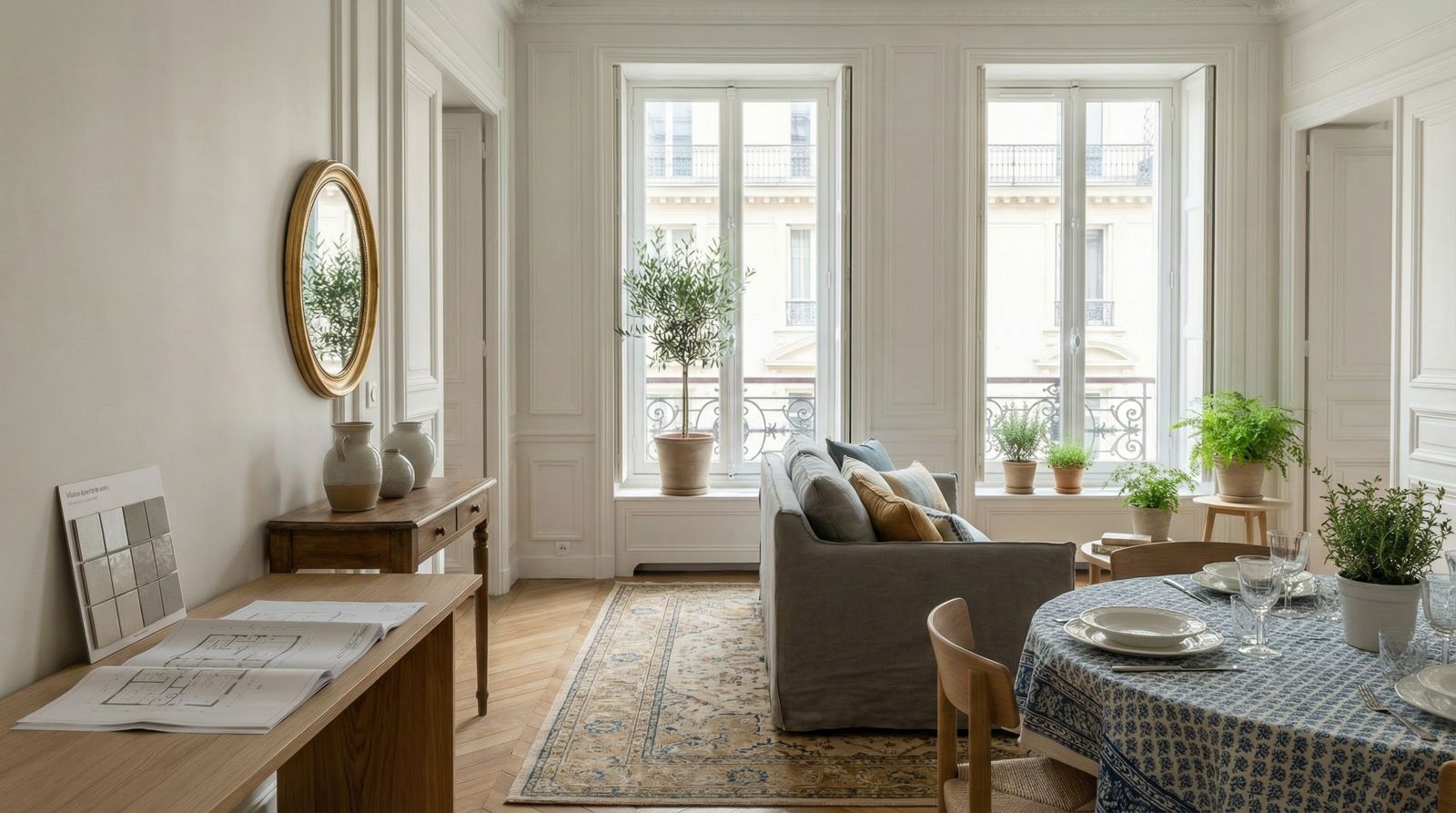
Renovating an apartment in Paris is rewarding — the city's character, high ceilings and historic details can turn an ordinary flat into a beautiful, functional home. But Paris also adds complexity: old wiring, building rules, co-op approvals and tight urban logistics. This guide gives a practical, step-by-step plan so you can move from idea to finished home with confidence — whether you're a long-time Parisian or newly arrived.
Step 1 — Define your goals and priorities
Before any quotes or plans, list what matters most. Is it an open kitchen, a larger bathroom, better insulation, more storage, or all of the above? Rank items by importance and separate "must-haves" from "nice-to-haves." This makes trade-offs clear during budgeting and helps your contractor propose real options rather than vague promises.
Tip: Take photos and make a quick sketch of the current layout. It saves time at the first visit.
Step 2 — Book a site visit & get a clear quote
Ask for an on-site visit — not an online estimate. A good visit includes measured dimensions, a review of utilities and an honest conversation about access (e.g., elevator, stairs, narrow corridors). Request a written, itemised quote that shows labour, materials and provisional allowances (e.g., tile X, paint Y).
What to expect from a reliable quote:
- Breakdown by trade (carpentry, plumbing, electrical, tiling)
- Timeline with major milestones
- Payment schedule and conditions
- Clear note about permits and building approvals
Step 3 — Check building rules and permits early
Many Paris apartments require permission from the syndic (building management) for structural or exterior works — and certain changes (e.g., moving plumbing stacks, creating new windows) may need a permit. Ask your contractor to confirm which approvals apply and include them in the schedule.
Pro tip: Allow extra time for syndic approvals and mairie (town hall) paperwork — getting them after work starts creates delays and costs.
Step 4 — Budget realistically and build contingency
Renovations almost always reveal surprises in older buildings (hidden wiring, damp, or uneven floors). Budget for contingency — a common rule is reserving 10–15% of the total quote for unexpected items. Discuss which elements are flexible (fixtures, finishes) and which must be fixed (structural, plumbing).
Step 5 — Choose materials suited for Paris living
Paris apartments benefit from durable, easy-to-maintain finishes:
- Flooring: solid wood or engineered parquet for character; porcelain large-format tiles for wet zones.
- Kitchens: modular kitchens with integrated appliances for narrow spaces.
- Bathrooms: wall-hung fixtures to save space and simplify cleaning.
- Insulation: consider thermal & acoustic upgrades, especially in older buildings.
Ask for sample boards before committing — seeing the material in your light can avoid disappointment.
Step 6 — Plan the timeline and communication
Make clear who will be your point of contact (preferably bilingual). Agree on:
- Start and end dates with milestone windows
- Regular update cadence (weekly photos or short calls)
- How change-orders are handled (approval, cost and timeline adjustments)
Clear communication prevents small issues from becoming major delays.
Step 7 — Protect yourself with simple contracts & guarantees
A written contract should include scope, schedule, payment terms, warranty and dispute resolution. For major works, request copies of tradespeople's insurance (assurance décennale if applicable) and references from recent projects.
Step 8 — Final inspection & handover
Before final payment, do a joint walkthrough with a checklist:
- Are finishes complete and consistent?
- Are plumbing and electrical systems fully tested?
- Is there a written record of any outstanding small items (punch list) and a deadline to fix them?
A clean, documented handover reduces friction and preserves your warranty rights.